[00:21.67]Well, morning everyone and welcome to EV island.
[00:25.99]The first thing I'll do is give you a bit more information about the island.
[00:31.95]Then you can walk around by yourselves so in terms of history, the first people to settle in New Zealand, the Maori people were already living on the island when Europeans first arrived approximately 200 years ago.
[00:50.03]At that time, the Maori population was only 2000 or so.
[00:55.67]It's thought that they got here around 1000 years ago based on the archaeological remains they left behind.
[01:04.09]The main resource the Maori came here for was the well stocked waters around the island, which provided most of their food.
[01:12.61]They also tried to grow potatoes, but the conditions weren't as good as on the mainland.
[01:18.06]The disadvantage for Maori was the shortage of trees on the island for building houses and canoes.
[01:25.30]It's also important to remember that the island is sacred to the Maori people's, so you need to behave respectfully near the archaeological sites.
[01:35.62]It's absolutely fine to use a camera and it's funny because some people think they need to whisper or be very quiet.
[01:44.33]But actually, that's not important either.
[01:47.85]But you really shouldn't consume food or even use your water bottle.
[01:52.93]That's not appropriate at the site.
[01:55.89]But it's fine elsewhere.
[01:58.52]Also, keep a close eye on the time because once the last boat returns to the mainland, there's no way off the island.
[02:07.52]Remember that the usual final sailing at six PM won't be going today because it's a public holiday.
[02:15.52]You need to be on the wharf at 10 to five ready to board the five pm departure.
[02:21.97]And the trip takes about half an hour, so you'll be back in town at 530 pm or so.
[02:40.32]Okay.
[02:41.48]Well, what I'm about to do next is tell you about some of the archaeological sites on the island.
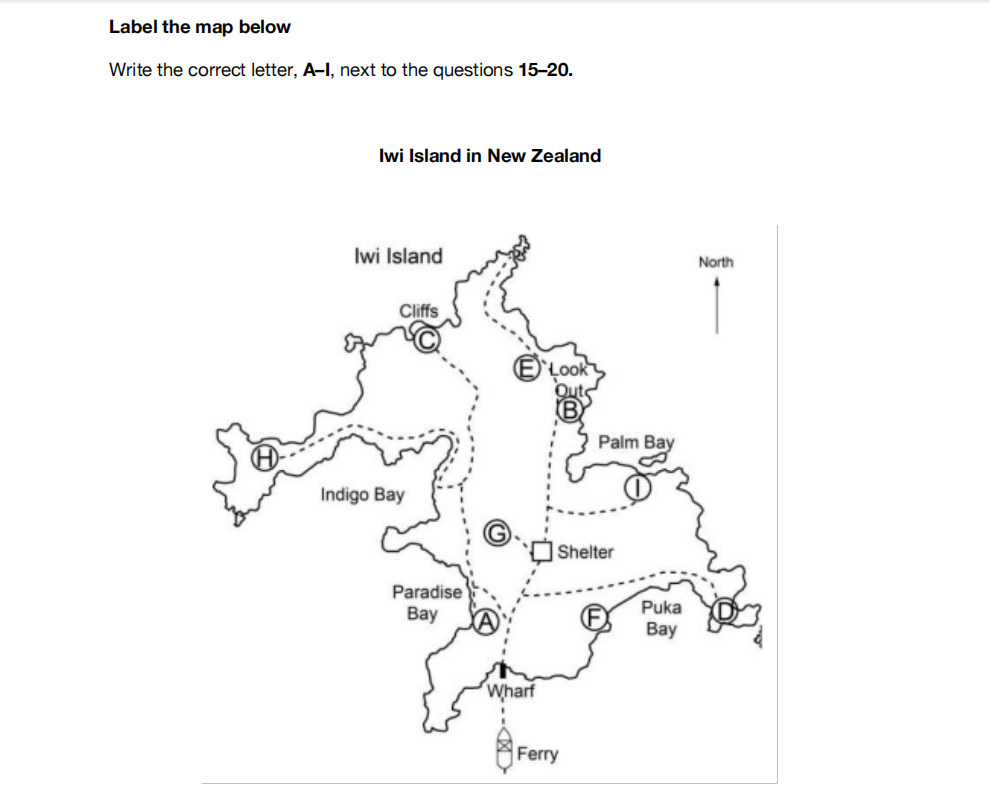
[02:49.11]So if you look at your map, we are now right at the bottom of the map at the wharf where the fairy comes in.
[02:57.14]So the first place to mention is the fort.
[03:00.38]To get there from the wharf, go up the path and take the first turning to the right.
[03:06.02]Then you follow the path around behind Puka bay and you'll come to the fort at the end of the headland.
[03:13.22]Now another interesting visit is to the Maori village.
[03:17.46]From the wharf, go up the path to the shelter and keep going straight on.
[03:22.90]You'll pass the lookout on your right and the village is just after that on the left.
[03:28.78]If you only want a shore walk, then a trip to the food storage pits is well worth it.
[03:35.10]Take the path from the wharf, but then turn left down to paradise bay.
[03:40.34]When you reach the beach, turn left again and the food storage pits are just along there by the sea.
[03:47.34]A slightly longer walk is to the garden terraces.
[03:50.78]You need to go up to the shelter and then keep going straight, but not too far.
[03:56.19]Take the first turning on your right and the garden terraces are on the coast overlooking the little island in palm bay.
[04:04.56]Now children especially will enjoy the gum diggers pits, though they are a reasonable walk.
[04:11.08]You turn left just after the wharf and when you reach the beach, turn right, then you need to keep going straight.
[04:18.56]Don't turn left down to indigo bay, but keep going and you' will find them right down the other end of the island on the cliffs on the north coast.
[04:28.33]Much closer is one of the oldest meeting houses in this part of the country.
[04:33.45]You go up to the shelter and turn left and it's directly in front of you.
[04:38.89]Well, now if anyone has any questions, I'll be happy to answer them for you.